
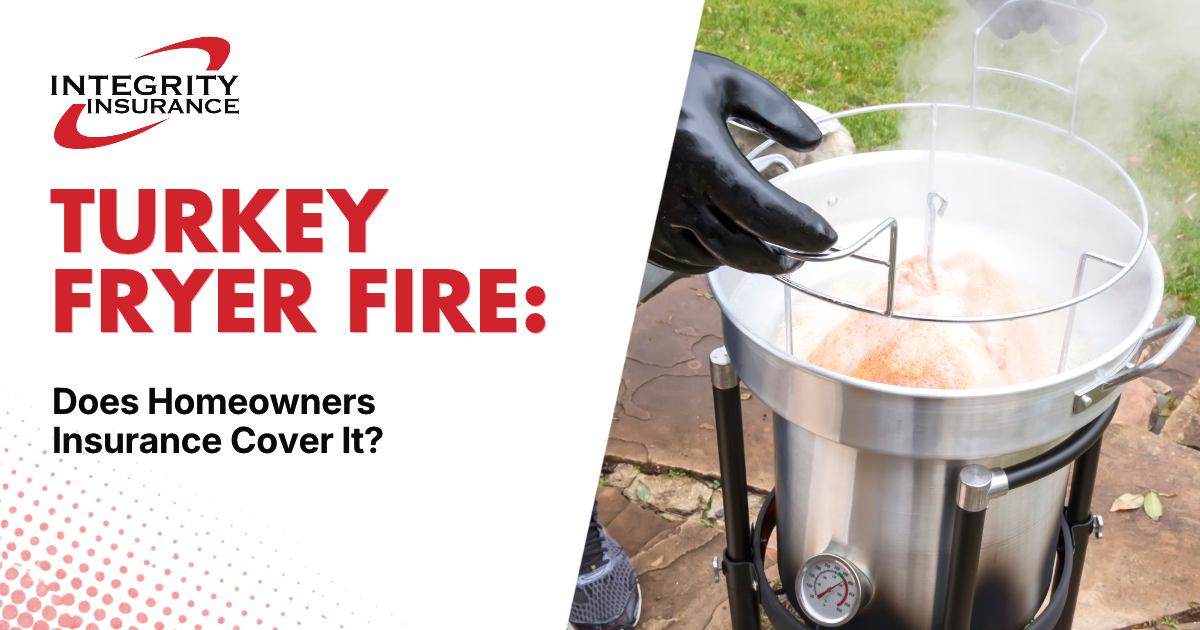
Yes. A standard homeowners policy usually covers a turkey fryer fire, even if it was an accident you could have prevented. Fire is a covered cause of loss, so your policy can pay to repair your house, garage, deck and fence, replace your belongings and cover a hotel while repairs are made. If the fire spreads to a neighbor's property or a guest gets burned, your liability coverage can help pay for that too, up to your limits and minus your deductible.
The bigger risk this year isn't your coverage. It's how dry Arkansas is. More on that below.
Why Thanksgiving is the worst day of the year for cooking fires
Thanksgiving is the No. 1 day for home cooking fires in the U.S. In 2024, fire departments responded to an estimated 1,139 home cooking fires on Thanksgiving Day, 321% more than an average day, according to the National Fire Protection Association (NFPA).
Turkey fryers are a big part of the risk. A fryer holds several gallons of oil heated to around 350°F. If you drop in a turkey that's still partly frozen or wet, or overfill the pot, the oil can boil over onto the burner and turn into a fireball in seconds. The NFPA discourages using oil-filled turkey fryers at all and suggests oil-less (infrared), air or electric fryers instead.
Frying a turkey in a drought: the Arkansas risk this year
This Thanksgiving, much of Arkansas is in drought, and nearly half the state is in exceptional drought, the most severe category. As of Nov. 24, 34 of Arkansas's 75 counties had burn bans, including Faulkner, Garland, Saline and Pulaski counties.
That matters if you fry outdoors. One spill of burning oil on dry grass or leaves can spread to your fence, your neighbor's yard or nearby woods fast.
Before you fry:
- Check your county's burn ban on the Arkansas Forestry Division's map. If you're not sure whether it covers outdoor cooking, call your county judge's office.
- Set up on bare concrete or dirt, well away from dry grass, leaves, brush and trees.
- Rake or wet down the area around the fryer before you light the burner.
What your homeowners insurance covers after a turkey fryer fire
- Your house, including the kitchen, siding and roof: dwelling coverage
- Your detached garage, shed, deck or fence: other structures coverage
- Your furniture, clothes and other belongings: personal property coverage
- A hotel and meals while your home is being repaired: loss of use (additional living expenses)
- Your neighbor's fence, house or yard: personal liability
- A guest who gets burned: medical payments to others or personal liability
Your regular deductible applies to fire claims. Your separate wind/hail deductible does not, since that only applies to wind and hail damage.
When a turkey fryer fire might not be covered
Most turkey fryer fires are covered, but watch for these gaps:
- Selling fried turkeys. If you fry turkeys for money, that's a business activity. Many homeowners policies limit or exclude business-related losses and liability. If you have a side business cooking for others, talk to us about business coverage.
- Renters. Your landlord's policy covers the building, not your belongings or your liability. You need your own renters insurance for those.
- Low limits. If a fire destroys your home, you need enough dwelling coverage to rebuild at today's construction costs. If a guest is badly burned, a lawsuit can exceed a typical $100,000 or $300,000 liability limit. An umbrella policy adds protection above that.
- A fire set on purpose. Intentional damage isn't covered. Carelessness generally is.
Example: a fryer fire on the back deck
This is a made-up example to show how coverage works.
A family in Greenbrier sets up their fryer on their wooden deck. The turkey is still a little frozen, the oil boils over, and the deck and part of the back wall catch fire. The fire department puts it out, but the deck, siding and a sliding door are ruined, and smoke damages the living room. Repairs come to $28,000, and the family stays in a hotel for two weeks.
With a $1,500 deductible, their homeowners policy would pay about $26,500 for repairs and belongings, plus their hotel and meal costs under loss of use, up to their limits. If they had set the fryer up on the driveway, it likely would have been an expensive turkey, and nothing more.
Turkey fryer safety checklist
- 1. Fry outside only, never in a garage, under a carport or porch roof, or on a wooden deck.
- 2. Keep it far from your house, cars, trees and anything that can burn, on flat, level ground.
- 3. Thaw the turkey completely and pat it dry. Ice and water make hot oil boil over.
- 4. Measure your oil first. Put the turkey in the empty pot, cover it with water, then remove the turkey and mark the water line. Fill with oil only to that line.
- 5. Turn off the burner before you lower the turkey in, then lower it slowly. Relight once it's in.
- 6. Never leave the fryer alone, and keep kids and pets well away.
- 7. Keep a fire extinguisher rated for grease fires nearby. Never use water on a grease fire.
- 8. Wait for the oil to cool completely before moving the pot. That can take hours.
What to do if your turkey fryer catches fire
- 1. Call 911. Don't try to fight a large oil fire yourself.
- 2. Never pour water on it. Water makes an oil fire explode.
- 3. Once everyone is safe, take photos of the damage before cleanup.
- 4. Prevent further damage if it's safe to, like covering a hole in the roof or wall. Keep the receipts.
- 5. Call us. For an after-hours emergency, call your insurance company's 24/7 claims line on your policy documents or carrier app, then call us the next business day.
- 6. Keep receipts for hotels, meals and emergency repairs. Loss of use coverage may pay them back.
Frequently asked questions
Is a grease fire covered by homeowners insurance? Yes. A standard homeowners policy covers accidental fire, including grease and cooking fires, minus your deductible.
Does homeowners insurance cover damage to my neighbor's house from my fire? Usually, yes. The personal liability part of your policy can pay for damage you accidentally cause to other people's property, up to your limit.
Does renters insurance cover a turkey fryer fire? Renters insurance covers your belongings, your liability and your extra living expenses. Your landlord's insurance covers the building.
Is the turkey fryer itself covered? The fryer is personal property, so it's generally covered if it's damaged in a covered fire. But it's probably not worth a claim on its own once you subtract your deductible.
Will a fire claim raise my homeowners insurance rates? It can. Carriers look at claims history at renewal. For a small loss, call us first to compare the damage to your deductible before you file.
Hosting Thanksgiving this year? Check your coverage first
Current Integrity Insurance clients: call us at (501) 581-0000 for a free policy review. We'll check your dwelling, liability and loss of use coverage before your guests arrive. Not a client yet? Request a quote and see how it feels to have a local team in your corner.
We have offices in Conway, Greenbrier, Morrilton, Benton, Hot Springs and Fayetteville. Happy Thanksgiving from all of us at Integrity Insurance.
Have a question about your coverage?
Talk to a local Integrity agent who knows Arkansas coverage.