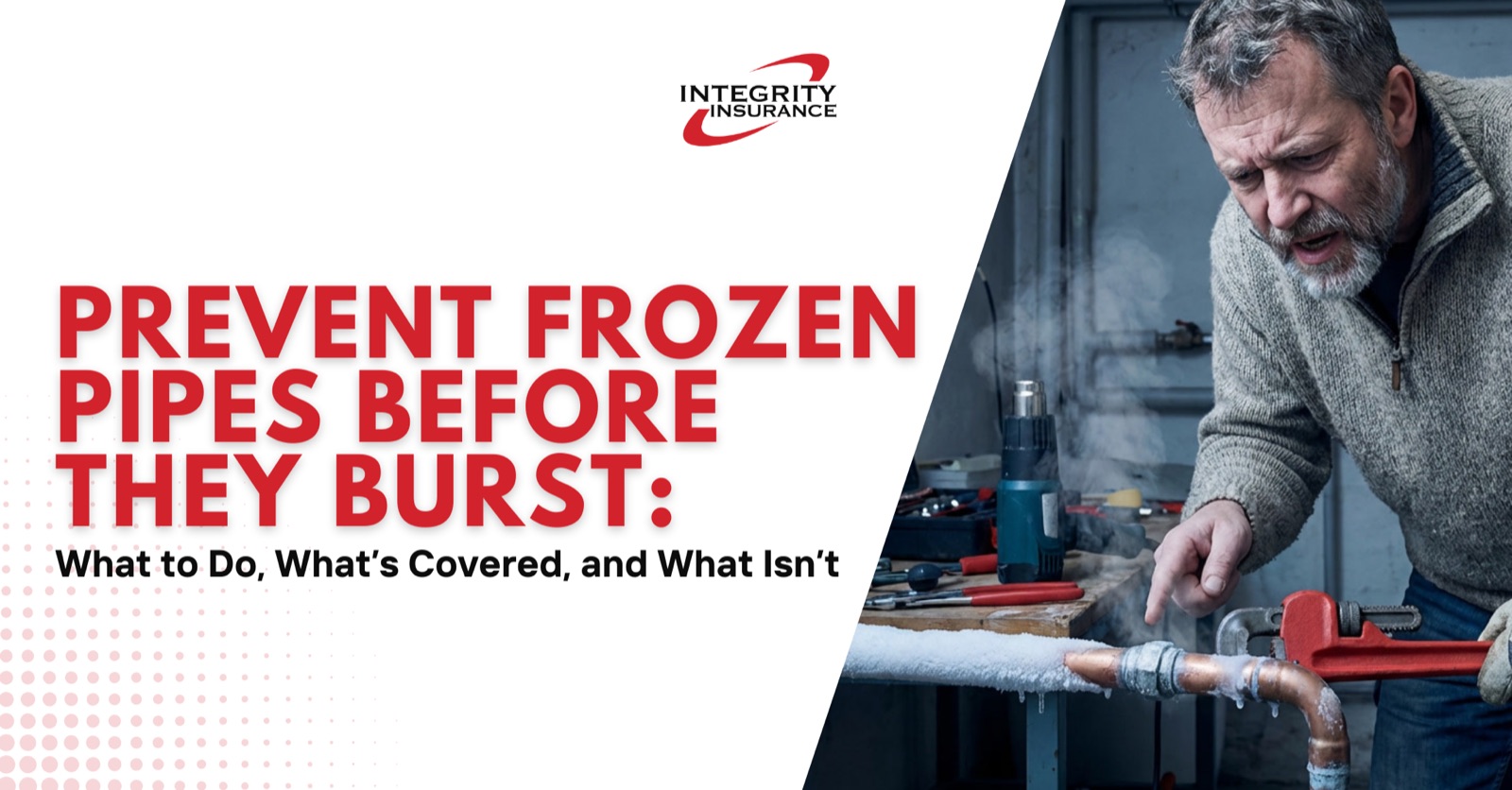
When temperatures drop, one of the most common and costly winter disasters is a burst pipe. It’s messy, disruptive, and expensive. However, they are often preventable. Frozen pipes can happen in homes, businesses, and even vacant buildings when water inside plumbing expands and bursts through weakened lines. Once that happens, the damage can spread quickly. A few hours of unnoticed water flow can destroy drywall, flooring, and equipment before anyone realizes what’s happening.
The good news is that frozen pipes are something you can prepare for. And knowing how your insurance coverage works can make all the difference if the unexpected happens.
Quick Prevention Checklist: Protect Your Home or Business
- Keep the heat on and circulating. Even if no one’s home, make sure interior temperatures stay well above freezing, especially in areas with plumbing.
- Open cabinet doors under sinks so warm air can reach supply lines.
- On the coldest nights, let faucets drip slightly to keep water moving and relieve pressure buildup.
Longer stretches of extreme cold require extra attention. Pipes in unheated spaces (such as attics, crawl spaces, exterior walls, garages, or mechanical rooms) are at the greatest risk. Wrap them with foam insulation or heat tape, and seal air leaks around rim joists, sill plates, and hose bibs. Disconnect outdoor hoses and add insulated covers to spigots. These small steps can prevent a major headache.
Maintain building heat when traveling or during off-hours. A smart thermostat with a low-temperature alert can notify you before a problem turns into a claim. Install smart leak sensors and automatic shut-off valves near water heaters and main lines. These systems detect moisture fast and can limit damage before it spreads.
If You’ll Be Away or the Building Is Idle
Cold weather doesn’t wait for convenience. If you’ll be out of town or if your business slows during the winter months, make a plan.
- Maintain heat as required by your insurance policy, or have the water system professionally shut off and drained.
- Ask someone you trust to check inside periodically to make sure everything is holding up.
For commercial properties, confirm your tenants or facility teams understand the minimum heat and inspection requirements. Building management responsibility can get complicated when multiple parties share space. Clear communication now can prevent coverage headaches later.
What Coverage Usually Looks Like
Homeowners policies typically cover water damage caused by a sudden and accidental pipe burst. That’s the key phrase: sudden and accidental. Most policies, however, exclude freezing if you failed to maintain heat or didn’t shut off and drain the system when the home was vacant or unoccupied. Keeping the heat on or properly winterizing isn’t just good practice; it’s a condition of coverage.
Commercial property policies work much the same way. Damage from accidental discharge is usually covered, but there are limitations. If you didn’t maintain heat, or if the building meets your policy’s definition of “vacant,” coverage may be reduced or excluded altogether. Many forms also limit freezing losses for idle operations or vacant spaces, so understanding your policy’s language matters.
Fire sprinkler systems are another area to watch. If a sprinkler line freezes and bursts, coverage often depends on whether you maintained heat or used antifreeze or dry systems as required. Skipping these steps could jeopardize your protection.
Important Limitations to Know
Not all water damage is the same. Wear and tear, corrosion, or long-term leakage aren’t “sudden and accidental.” Those issues fall under maintenance, rather than insurance.
Mold and fungus coverage usually has low limits and strict remediation timeframes, so it’s best to act quickly.
Another big one is water backup from sewers or drains. That’s not the same as a burst frozen pipe. It’s only covered if you’ve added a specific endorsement. Likewise, losses caused by power outages (like a furnace shutting off) may be excluded unless you have utility service or “off-premises power” coverage.
After a loss, building codes might require you to upgrade damaged plumbing or walls to meet current standards. Ordinance or Law coverage can help with those costs in certain cases, another good conversation to have with your agent before winter sets in.
For businesses, business income and extra expense coverage can respond when operations are interrupted by a covered loss. But timing matters. Waiting periods, restoration limits, and utility exclusions all affect how and when that coverage kicks in.
Step-by-Step: What to Do If a Pipe Bursts
- Shut off the main water supply immediately. If it’s safe, cut electrical power to affected areas.
- Document everything. Take photos and videos of affected rooms, contents, and the burst pipe.
- Prevent further damage. Extract standing water, run fans and dehumidifiers, and move undamaged belongings out of the way.
- Save damaged parts like the burst section of pipe until your adjuster inspects them.
- Keep a simple loss log. Record the date and time you discovered the leak, which rooms were affected, and who responded. Keep receipts for all expenses.
- For businesses, track downtime, lost production, and extra expenses related to continuing operations.
Act fast after a leak. Shut off the water, protect property from further damage, and start drying immediately. Save every receipt, even small ones. They help your claim move faster and more smoothly.
Key Takeaways for Coverage and Prevention
- Keep heat on: To preserve coverage, most policies require you to maintain heat in any area with plumbing or, if you cannot, to shut off the water and drain the system.
- Vacant or unoccupied buildings: Coverage for freezing losses can be limited when a building is not in regular use. Know how your policy defines “vacant.”
- Smart protection pays: Many insurers recognize automatic shut-off valves and leak sensors with policy credits.
- Act fast after a leak: The sooner you document and mitigate damage, the smoother your claim will go.
At Integrity Insurance, we help homeowners and business owners understand not just their coverage, but their risks. Review your policy’s freezing and heat maintenance conditions before the first freeze, and ask about endorsements for water backup, utility service interruption, smart water shut-offs, and Ordinance or Law coverage. Protecting your property from frozen pipes isn’t just about avoiding damage; it’s about protecting peace of mind all winter long.
Related coverage
Have a question about your coverage?
Talk to a local Integrity agent who knows Arkansas coverage.